
Preamble
Recognizing the rapid advancement of surgical robotics, 5G-Standalone (5G-SA) networks, and cross-border digital health collaboration—and acknowledging the critical absence of harmonized global frameworks—this Declaration establishes the foundational principles for the safe, ethical, and regulator-aligned readiness of telesurgical systems.
We assert that the future of telesurgery depends not on the speed of deployment, but on the strength of governance. The Declaration further recognizes the need for equitable global access to safe telesurgical capabilities, ensuring that technological advancements benefit all populations regardless of geographic location.
The Principles
1. Patient Safety & Connectivity Resilience First
Telesurgery readiness must prioritize patient safety through validated simulation, network redundancy planning, and “human-in-the-loop” controls. Systems must implement robust connectivity risk mitigation and clearly defined fail-safe protocols that ensure immediate local intervention if a link is compromised.
2. Simulation & AI-HEAL Literacy Before Clinical Use
Telesurgery readiness must prioritize patient safety through validated simulation, network redundancy planning, and “human-in-the-loop” controls. Systems must implement robust connectivity risk mitigation and clearly defined fail-safe protocols that ensure immediate local intervention if a link is compromised.
3. Clear Clinical Responsibility & Liability Frameworks
At all times, clinical responsibility must be explicitly mapped across the operating surgeon, the local clinical team, the hosting institution, and the technology provider. Ambiguity of responsibility undermines safety, public trust, and the development of cross-border malpractice insurance frameworks.
4. Regulatory & Telecommunications Alignment
At all times, clinical responsibility must be explicitly mapped across the operating surgeon, the local clinical team, the hosting institution, and the technology provider. Ambiguity of responsibility undermines safety, public trust, and the development of cross-border malpractice insurance frameworks.
5. Regulatory & Telecommunications Alignment
Remote participation is contingent upon verified digital credentials and demonstrated competency on the specific robotic platform. GlobalSurge advocates for a “Digital Medical Visa” framework to ensure surgeon identities are authenticated via secure, sovereign infrastructure before a link is established.
6. Zero-Trust Cybersecurity & Data Protection
All systems must utilize Zero-Trust architecture, implement continuous monitoring, and comply with international data protection laws (e.g., GDPR, HIPAA). This includes encrypted communications, multi-factor access controls, and immutable audit trails.
7. Universal Auditability & Transparency
Every telesurgical event must be fully auditable. We advocate for the use of secure, decentralized logs (Blockchain) to capture system performance, operator actions, and clinical outcomes to support quality assurance and regulatory oversight.
8. Phased, Evidence-Based Progression
The adoption pathway must follow a disciplined, regulator-approved progression:
Phase I: Education and AI Literacy training.
Phase II: Simulation and technical latency validation.
Phase III: Non-clinical pilots and animal/cadaveric models.
Phase IV: Carefully governed, ethically overseen clinical use.
9. Technological Neutrality
This Declaration is hardware-agnostic. We focus on the integrity of the digital “handshake,” the stability of the 5G link, and the safety of the governance layer, regardless of the robotic hardware or surgical platform utilized.
Conclusion
Telesurgery evolves as a safe, ethical, and universally beneficial advancement only when stakeholders collaborate on shared global standards. We call upon governments, industry leaders, and academic institutions to join us in building this framework of trust.
Be Part of the Tallinn Declaration Launch
Register your interest to attend the official Tallinn Declaration ceremony and connect with leaders shaping the future of AI-enabled healthcare, digital governance, and global telesurgery collaboration.
Founding Signatories
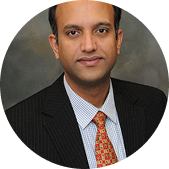
Dr. Sajeesh Kumar, PhD, FAMIA, FAAO
Founder & Chair, Global Telesurgery Governance Council (GlobalSurge)
Associate Professor, University of Tennessee Health Science Center
Principal Investigator, NIH/NLM AI-HEAL Project
Lead Author, ‘Telesurgery’ (Springer Nature, 2024)